Types of Invertebrates and its Characteristics (original) (raw)
Last Updated : 23 Jul, 2025
**The invertebrates are characterized by the absence of a vertebral column and they can be classified mainly into nine types according to the Phyla. Invertebrates are the largest group in the animal kingdom which are mainly included in the Phyla Protozoa, Porifera, Cnidaria, Annelida, Platyhelminthes, Aschhelminthes, Arthropoda, Mollusca, and Echinodermata.
Invertebrate animals play an important role as agricultural pests, parasites, or vectors of parasitic infections to humans and other vertebrates and also help in plant pollination. In this article, we will learn about **different types of invertebrates along with their characteristics.

Table of Content
- What are Invertebrates?
- Characteristics of Invertebrates
- Types of Invertebrates
- Examples of Invertebrates
- Conclusion: Invertebrates
- FAQs on Invertebrates
What are Invertebrates?
Invertebrates are the largest group of animals in the animal kingdom having **no vertebral column or backbone. They are the most diversified group of animals living on land like insects, spiders, and worms, or in water like marine crustaceans. They do not have an endoskeleton but have an exoskeleton to support and protect the body. They can regulate body temperature and therefore they are also called **cold-blooded animals. They can be carnivorous, herbivorous, or omnivorous.
Also Read: Difference between Invertebrates and Vertebrates
Characteristics of Invertebrates
The main characteristics of invertebrates are stated below.
- **Habitat: Invertebrates are widely distributed on lands like Arthropods, freshwater, and sea such as sponges and coelenterates. About 80% of the invertebrates are terrestrial. Protozoans have free-living or parasitic life and sometimes live as commensals.
- **Numbers: About **95% of all the animals in the animal kingdom are invertebrates.
- **Body shape: Body shape varies among invertebrates. Amoeba has an irregular shape and flatworms have leaf-like or ribbon-shaped bodies whereas Starfishes have star-shaped bodies.
- **Size: Size varies from microscopic to macroscopic. For example, Plasmodium are the smallest in size whereas giant squids are the largest one.
- **Body Symmetry: The body can be asymmetrical, bilateral, or radially symmetrical. For example, Protozoans have bilateral, radial, or asymmetrical bodies whereas sponges have asymmetrical or radially symmetrical bodies.
- **Tissue Grade of Organisation: They have all grades of organization like protoplasmic grade (Protozoa), cellular grade (Sponges), cell-tissue grade (Coelenterates), and tissue-organ grade (Flatworms).
- **Germ Layers: Germ layers are diploblastic (Sponges and Coelenterates) or triploblastic (other than Sponges and Coelenterates). Germ layer absent in Protozoans.
- **Simple Integument: Bodies have a simple covering known as the epidermis (except Protozoa). Protozoans have plasma membranes.
- **Locomotion: Locomotory organs are cilia, flagella pseudopodia (Protozoans), setae, parapodia (Annelids), jointed legs (Arthropods), and arms (Echinoderms). Sponges and corals are sessile.
- **Body Segmentation: Some have true segmentation (Annelids and Arthropods) and some have pseudo-segmentation (Flatworms).
- **Living Endoskeleton: They do not have a rigid internal skeleton. But some possess hard exoskeletons (Arthropods and Molluscs).
- **Coelom : Pseudocoelom or true coelom are present. Acoelomates have no coelom.
- **Alimentary canal: It is either absent or present partially formed and in some, a complete alimentary canal is present dorsal to the nerve chord running from the anterior terminal mouth to the posterior terminal anus.
- **Digestive System: Digestion is intracellular or extracellular or both.
- **Circulatory System: The circulatory system is open or closed or lacunar. The heart is present in the dorsal side of the gut.
- **Respiratory System: Respiration occurs through direct gas diffusion or skin or gills or tube feet or tracheal system.
- **Excretory Mechanisms: Excretory organs are flame cells, true nephridia, malpighian tubules, or amoeboid cells.
- **Nervous System****:** The central nervous system is represented by a ring of nerve tissue encircling the body or a pair of nerve cords running along the mid-ventral line of the body. In higher vertebrates, the brain is present in the form of head ganglia.
- **Sense Organs: Sense organs include stigma, eyespots, chemoreceptors, simple eyes, compound eyes, statocysts, and tactile receptors.
- **Reproduction: Reproduction is either asexual (binary fission) or sexual. Fertilization may be internal or external. Development is direct or indirect. Parthenogenesis occurs in some invertebrates like Rotifers and bees.
- **Body temperature: All invertebrates are cold-blooded animals i.e. they can regulate body temperature.
Also Read: Difference Between Chordates and Non Chordates
Types of Invertebrates
Invertebrates can be categorized into nine types which belong to the following phyla.
- Phylum: Protozoa
- Phylum: Porifera
- Phylum: Cnidaria
- Phylum: Annelida
- Phylum: Platyhelminthes
- Phylum: Aschhelminthes
- Phylum: Arthropoda
- Phylum: Mollusca
- Phylum: Echinodermata
Characteristics of Protozoa
The main characteristics of Protozoa are as follows.

- **Unicellular: Single-celled organisms.
- **Habitat: Freshwater, marine environments, and soil.
- **Shape: Different shapes and sizes..
- **Nutrition: Autotrophic, heterotrophic, or both.
- **Reproduction: Asexual reproduction by fission, schizogony, or budding. Some reproduce sexually.
- **Parasitic: Free-living or parasitic.
Also Read: Vertebrata - Definition, Classification, Characteristics
Characteristics of Porifera
The main characteristics of Porifera are as follows.
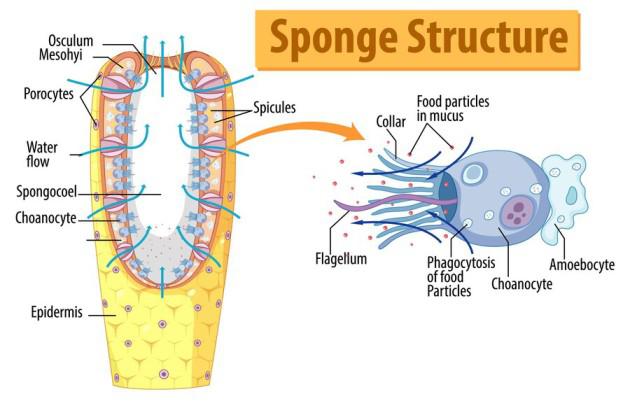
- **Body Symmetry: Radially symmetrical or asymmetrical.
- **Body structure: Simple body structure with pores and canals lined with choanocytes.
- **Germ layers: Diploblastic.
- **Organization: Cellular grade of organization.
- **Habitat: Marine or freshwater species.
- **Reproduction: Hermaphrodite with internal fertilization.
Characteristics of Cnidaria
The main characteristics of Cnidaria are as follows.
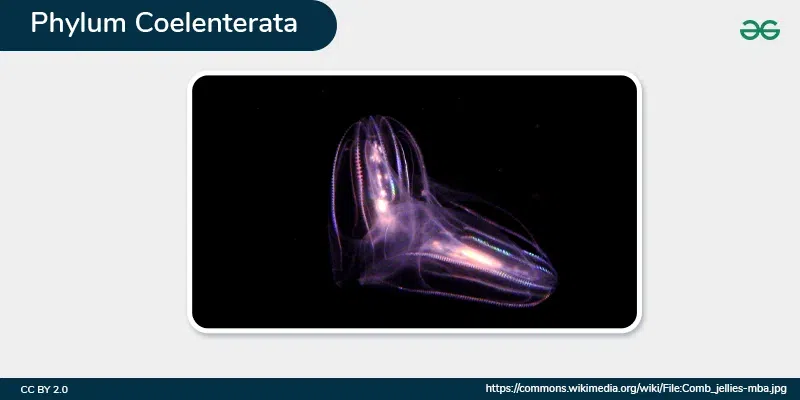
- **Body symmetry: Radial symmetry.
- **Germ layers: Diploblastic
- **Gastrovascular cavity: Saclike coelenteron with one mouth-like opening..
- **Tentacles: Tentacles with nematocytes present.
- **Nematocysts: Nematocysts present on specialized cells called cnidocytes Nematocysts contain toxins to immobilize prey.
- **Coelom: They are acoelomate i.e. coelom is absent. But a thick, elastic, jelly-like substance called mesoglea is present in between the outer and inner body layers.
- **Nervous system: Nerve net present.
Characteristics of Annelida
The main characteristics of Annelida are as follows.

- **Body segments: Small ring-like segmented body covered with a thin cuticle.
- **Body Symmetry: Bilaterally symmetrical.
- **Digestive system: Digestive system is complete.
- **Circulatory system: Circulatory system is closed type.
- **Respiration: Respiration through the body surface.
- **Excretion: Excretory organs are nephridia.
- **Coelom: A protective fluid-filled sac is present around the digestive system.
- **Nervous system: Brain and nervous system present.
- **Habitat: Damp soil, freshwater, and marine water.
Also Read: Levels of Organization in Animals
Characteristics of Platyhelminthes
The main characteristics of Platyhelminthes are as follows.
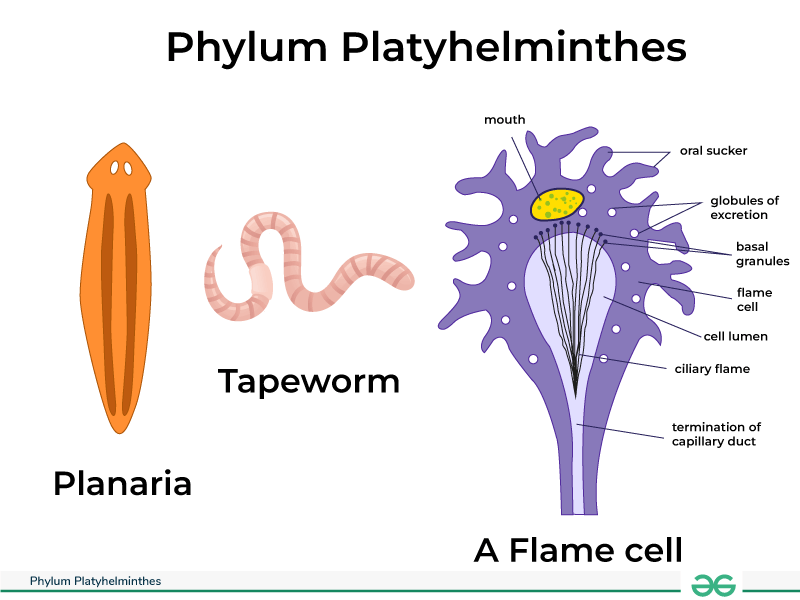
- **Body structure: Soft, unsegmented bodies are dorsoventrally flattened and leaf-like.
- **Body symmetry: Bilateral symmetry.
- **Digestive system: Incomplete digestive system.
- **Respiration: Simple diffusion through the body surface.
- **Excretory system: Flame cells and protonephridia present.
- **Germ Layers: Triploblastic.
- **Coelom: Coelom is absent.
Characteristics of Aschelminthes
The main characteristics of Aschelminthes are as follows.

- **Body symmetry: Bilaterally symmetrical, cylindrical, and unsegmented.
- **Coelom: Fluid-filled pseudocoelom present.
- **Cuticle: External cuticle present which is molted periodically.
- **Systems: Well-developed nervous system and excretory system are present.
- **Size: Size varies from microscopic to approximately 1 meter long.
- **Appearance: Colorless and tubular in appearance.
- **Reproduction: Sexual reproduction.
- **Habitat: Aquatic or terrestrial.
- **Parasitic: Parasitic or free-living.
Also Read: Difference Between Protostomes And Deuterostomes
Characteristics of Arthropoda
The main characteristics of Arthropoda are as follows.

- **Exoskeleton: Exoskeleton is made of chitin.
- **Body segments: The body is segmented into three regions: head, thorax, and abdomen.
- **Appendages: Jointed appendages.
- **Body symmetry: Bilaterally symmetrical body.
- **Circulatory system: Circulatory system is open type.
- **Sensory organs: Antennae, eyes, statocysts, and auditory organs.
- **Respiration: Respiration through the body surface or trachea.
- **Excretion: Excretory organs are Malpighian tubules and green glands.
- **Reproduction: Sexual reproduction with internal or external fertilization.
- **Habitat: Land, water, and soil.
Characteristics of Mollusca
The main characteristics of Mollusca are as follows.
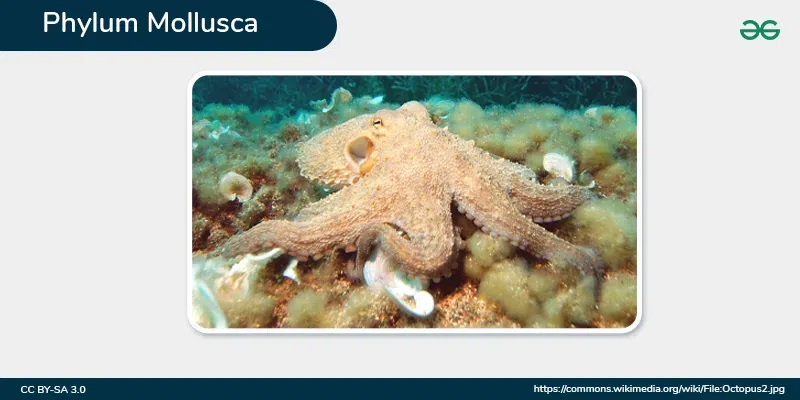
- **Body: Soft, unsegmented body is covered by a calcareous shell. The body is divided into three parts - the head, a visceral mass, and a ventral foot.
- **Mantle: A mantle with a mantle cavity is used for breathing and excretion. The radula, a ribbon of teeth is present on the mantle.
- **Nervous system: Specific nervous system present.
- **Respiration: Respiration through gills.
- **Body symmetry: Bilaterally symmetrical.
- **Germ Layers: Triploblastic.
Also Read: Diploblastic And Triploblastic Organization
Characteristics of Echinodermata
The main characteristics of Echinodermata are as follows.
- **Body symmetry: Pentaradial symmetry.
- **Spiny skin: Skin is piny and bumpy.
- **Water vascular system: A specialized water vascular system is used for feeding and breathing.
- **Endoskeleton: Endoskeleton is made up of calcareous ossicles.
- **Tube feet: Tube feet with suckers present.
- **Regeneration: Echinoderms can regenerate themselves.
Examples of Invertebrates
Some of the examples of invertebrates belonging to different phyla are given below.
- Phylum- Protozoa: Amoebas, Paramecia
- Phylum- Porifera: Sponges, Hexactinellida
- Phylum- Cnidaria: Hydras, Sea anemones
- Phylum- Annelida: Earthworms, Leeches
- Phylum- Platyhelminthes: Tapeworms, Liver flukes
- Phylum- Aschelminthes: Whipworms, Ascaris
- Phylum- Arthropoda: Insects, Spiders
- Phylum- Mollusca: Octopus, Squid
- Phylum- Echiodermata: Starfish, Sea urchins
Conclusion: Invertebrates
Invertebrates are animals that do not have a backbone. They make up the majority of animal species, with an estimated 97% of all animals being invertebrates. Invertebrates can be found in all habitats on Earth, from the deepest oceans to the highest mountains. They vary greatly in size, from microscopic rotifers to giant squids. Invertebrates have a wide range of body plans, and they can be classified into many different phyla. Some of the most common phyla of invertebrates include arthropods, mollusks, annelids, echinoderms, flatworms, cnidarians, and sponges. They are a food source for many other animals, and they help to decompose organic matter. Invertebrates also play a role in pollination and seed dispersal.
**Also Read: