Plant Growth and Development (original) (raw)
Last Updated : 28 Nov, 2025
Plant growth and developmentisa process that are influenced by internal and external factors, including genetic makeup and environmental conditions. Various stages of plant growth, the physiological processes involved, and factors influencing plant development.
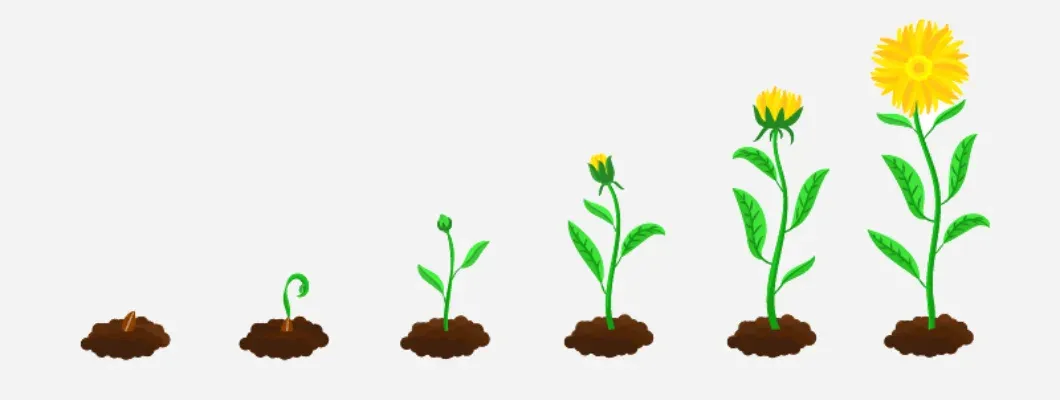
Characteristics of Plant Growth
- Plant growth and development refer to the processes by which plants increase in size and complexity throughout their life cycle.
- Growth involves the irreversible increase in size or mass of plant parts, while development includes changes in form, structure, and function as plants progress from germination to maturity.
- These processes are regulated by genetic factors, environmental signals, and hormonal signals, ultimately determining the plant's morphology, physiology, and reproductive capacity.
- Growth is a characteristic feature of living beings. Plants grow as well. Plant growth involves permanent changes in the size of the plant. It also includes an increase in the size, mass, or volume of plant structures. The process of plant growth includes various cellular processes such as cell division, elongation, and differentiation.
- One of the important processes in plant growth is seed germination.
- Factors influencing plant growth include environmental conditions like light, temperature, water, nutrients, and the presence of hormones.
- Plants show different stages of growth and development at any point in time. This is due to the unique capability for their unlimited growth, which occurs due to the presence of special actively dividing cells, called meristems.
**Also Read: Meristematic Tissues
**Types of Plant Growth
Plant growth can occur in two types:
- **Determinate Growth: Growth stops after reaching a certain size or stage of development, typically observed in annual plants
- **Indeterminate Growth: Growth continues throughout the plant's life, common in perennial plants such as trees and shrubs.

Shoot Meristems
Growth is Measurable
Some parameters can be considered to measure plant growth. Those parameters are:
- Increase in fresh weight
- Dry weight
- Length
- Area
- Volume
- Cell Number
Phases of Growth in Plants
The plant growth period is generally divided into three phases, which are:
- Meristematic
- Elongation
- Maturation
Now, let's read about them in detail.
| Phases of Growth in Plants | Description |
|---|---|
| Developmental/ Meristematic Phase | Mitosis is a type of cell division that occurs during plant development and includes both quantitative and qualitative cell division. This cell division occurs in two phases: the division of the nucleus (**karyokinesis) and the division of the cytoplasm (**cytokinesis). In higher plants, cell growth stops at the meristematic site. Some small daughter cells retain this meristematic activity, while others move to the next developmental phase, such as the cell multiplication stage. |
| Cell Enlargement/ Elongation and Cell Differentiation | At this stage, the tissues and organs enlarge. This expansion occurs through the shaping of the protoplasm, hydration (water retention), the formation of vacuoles, and the subsequent addition of new cell divisions to make it permanent and thicker. |
| Cell Maturation | At this stage, the expanded cells acquire different sizes and structures depending on the area and task. In this way, different cells are separated from basic and complex tissues that have different roles. |
Growth Rates
The increased growth per unit of time is called the **growth rate.

Growth Rates in Plants
Factors Affecting Plant Growth
The plant growth is maximum in optimum conditions. These conditions include:
- **Light: Essential for photosynthesis; influences plant growth, flowering, and fruiting.
- **Water: Important for nutrient uptake, photosynthesis, and cell expansion.
- **Temperature: Affects enzyme activity, photosynthesis, and metabolic processes.
- **Nutrients: Macronutrients like nitrogen, phosphorus, and potassium, and micronutrients like iron, zinc, and magnesium are crucial for plant growth.
- **Soil pH: Influences nutrient availability and root uptake.
- **Air: Oxygen is required for respiration, while carbon dioxide is essential for photosynthesis.
- **Humidity: Affects transpiration rates and water uptake.
- **Wind: Can affect plant shape and structure, influencing growth patterns.
Example of Plant Growth and Development
Stem growth can be easily observed. Plant development occurs when stems and roots are stretched. Some plants, especially woody plants, also increase in thickness over the course of their lives. The expansion of the shoot and root is called essential development and is a consequence of cell division in the shoot apex meristem.
Differentiation, Dedifferentiation, and Redifferentiation
These terms are used to describe plant growth.
| **Terms | **Description |
|---|---|
| **Differentiation | In this phase, the cells originated from the root and shoot apical meristems and cambium mature to play some specific functions. Cells also undergo structural changes in terms of their cell wall and protoplasts. |
| **Dedifferentiation | After differentiation, the differentiated cells, which have lost the capability of multiplication, regain the capability under certain conditions. |
| **Redifferentiation | After dedifferentiation, the resultant cells once again lose the capability of multiplication, but mature and play some specific functions. |
**Also Read: Differentiation, Dedifferentiation, and Redifferentiation
Development in Plants
Development in plants refers to the process by which a plant undergoes changes and maturation from seed germination to the formation of mature structures, including roots, stems, leaves, flowers, and fruits. It includes various stages of growth, differentiation, and specialisation, leading to the overall growth and adaptation of the plant to its environment.

Sequence of the Developmental Process in a Plant Cell
Plasticity
The plant leaves in the juvenile phase are different in shape from those in the mature plants. This is known as **heterophylly. It is an example of plasticity. Some examples of the plants that show such a phenomenon are:
- Cotton
- Coriander
- Larkspur

The shape of the Leaf differs between the Adult and Juvenile stages
Plant Growth Regulators
Plant growth regulators, also known as plant hormones or phytohormones, are naturally occurring chemical compounds that regulate various aspects of plant growth and development. These substances play a crucial role in controlling processes such as cell division, elongation, differentiation, and responses to environmental stimuli.
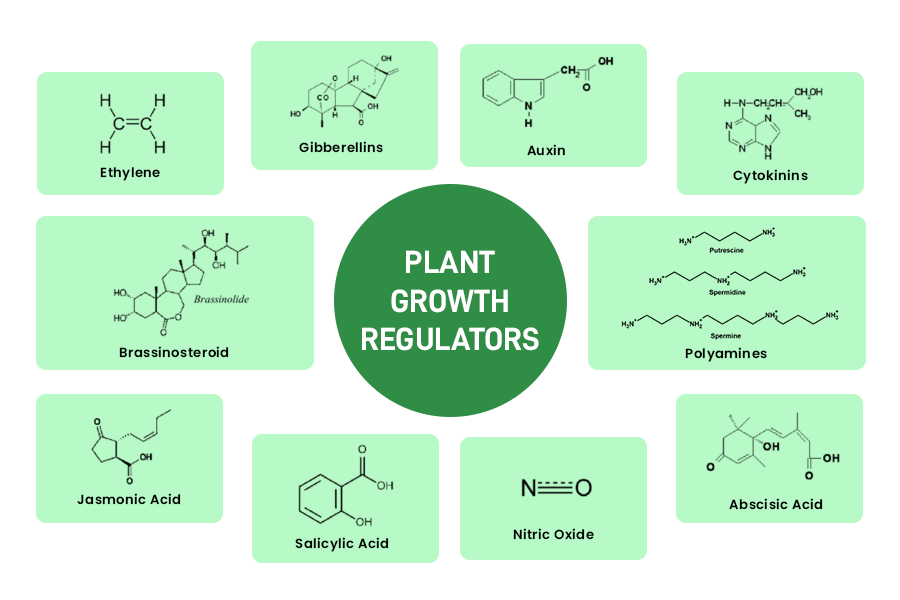
Plant Growth Regulators
Plant Growth Hormones Effects
The role of each plant growth regulator differs from that of others. Let's read about them.
| **Plant Hormones | **Physiological Effect |
|---|---|
| **Auxin | Stimulate cell elongation, root formation, and apical dominance; inhibit lateral bud growth and promote fruit development. |
| **Gibberellin | Stimulate stem elongation, seed germination, and fruit development; break seed dormancy. |
| **Cytokinins | Stimulate cell division, promote shoot and root growth, delay senescence, and enhance nutrient mobilisation. |
| **Abscisic Acid | Inhibit seed germination, promote seed dormancy, regulate stomatal closure, and enhance stress tolerance. |
| **Ethylene | Stimulate fruit ripening, senescence, and abscission; promote root and stem thickening; induce flowering and leaf abscission. |