Plant Kingdom (original) (raw)
Last Updated : 20 Mar, 2026
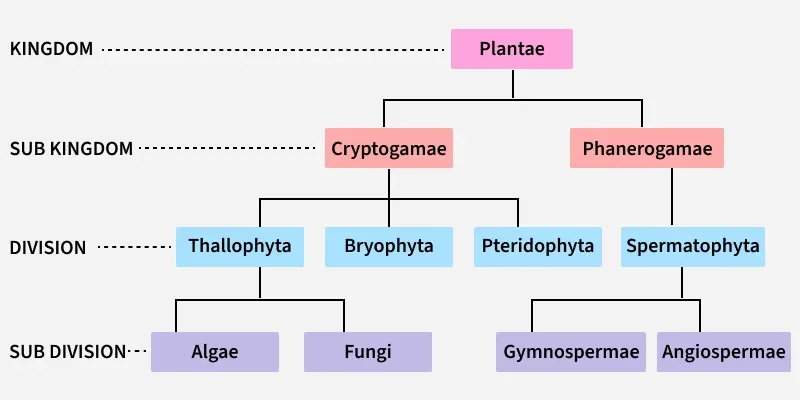
The Plant Kingdom, also known as Kingdom Plantae, is one of the five kingdoms in the classification system proposed by R. H. Whittaker. It includes a wide variety of organisms such as algae, mosses, ferns, gymnosperms, and angiosperms. All members of this kingdom are multicellular, eukaryotic, and primarily autotrophic, meaning they are capable of preparing their own food through photosynthesis.
The classification of plants is based on their structural features and modes of reproduction, which helps in understanding the diversity and complexity within the plant kingdom.
All the organisms of the plant kingdom consist of herbs, shrubs, and trees, which can manufacture their food. They have a chloroplast organelle containing chlorophyll, which is the main pigment for the process of photosynthesis. The plants help release oxygen and absorb carbon dioxide, and they utilize it to make food. Plants also play a major role in the water cycle, where they release water vapor from the tips of their leaves through transpiration.
**Characteristics of Kingdom Plantae
- These are multicellular eukaryotes.
- They synthesize their food and thus are called autotrophs.
- They are nonmotile.
- Plants contain photosynthetic pigments called chlorophyll that are present in the plastids.
- They reproduce asexually, either through vegetative reproduction or sexual reproduction.
- A haploid gametophyte and a diploid sporophyte are produced alternately throughout the life cycle.
- Plants store their food as starch.
Classification of Kingdom Plantae
The plant kingdom is classified into major groups based on their structure, level of organization, and mode of reproduction.
1. Thallophytes
Algae are the sole members of the division Thallophyta. These are simple, autotrophic, and mostly found in aquatic habitats.
The following are some of its characteristics:
- They are found in colonial or filamentous form. One of them, called kelp, is capable of forming massive plant bodies.
- Asexual reproduction occurs via zoospores, which are motile in nature.
- Vegetative reproduction occurs via fragmentation.
- Sexual reproduction occurs via the fusion of two gametes. It can be isogamous or anisogamous.
- Their major role includes carbon dioxide fixation, and they also act as the primary producers of energy-rich compounds.
- Based on the pigment present in them, they are further classified as Chlorophyceae, Rhodophyceae, and Phaeophyceae.
**Examples: Volvox, Ectocarpus, Red algae, Chlamydomonas, etc.
**2. Bryophytes
Bryophytes are called amphibians of the plant kingdom because they require water for fertilization. These include mosses and liverworts.
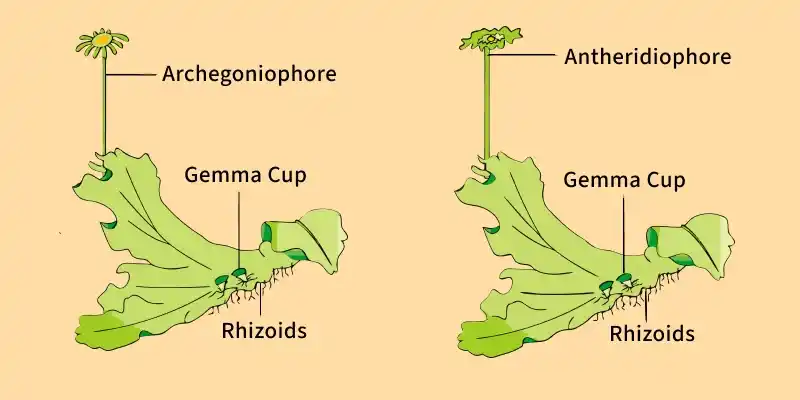
Some of its characteristics are:
- They lack true roots, stems, or leaves.
- The main plant body is haploid and is called a gametophyte.
- The male and female sex organs are different.
- The male sex organ is called antheridium, and the female sex organ is called archegonium.
- The zygote produced is called the sporophyte, which remains attached to the main plant body.
- Some of the cells of the sporophyte undergo meiosis to produce spores.
**Examples: Sphagnum, Marchantia, Funaria, etc.
**3. Pteridophytes
Pteridophytes are the first land plants to possess a welldeveloped vascular system. They commonly grow in moist and shady environments and include plants like ferns and horsetails. Many pteridophytes are used for ornamental purposes, and some also have medicinal value.
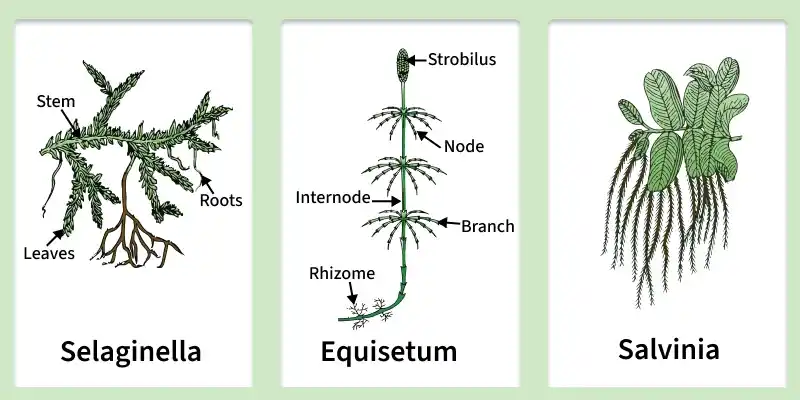
Some of its characteristics are:
- They are found in shady areas.
- Horsetails and ferns are the dominant species in this division.
- They possess true roots, stems and leaves
- The sporophytic stage is the dominant phase.
- The spores germinate to give rise to a gametophytic body known as a prothallus.
- These are further classified into our classes: Psilopsida, Lycopsida, Sphenopsida, and Pteropsida.
**Examples: Salvinia, Selaginella, Equisetum, etc.
**4. Gymnosperms
Gymnosperms are naked-seeded plants. The plants are woody and perennial and range from tall trees to dwarf shrubs.
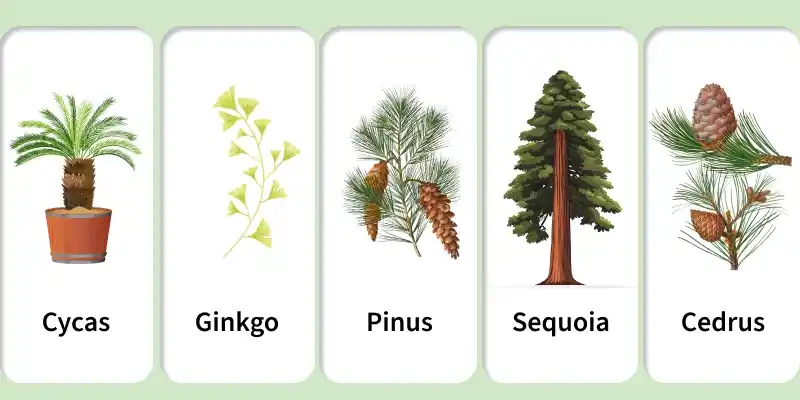
Some of its characteristics are:
- They have a well-differentiated plant body and vascular system.
- In these plants, the ovules are not enclosed within an ovary wall and remain exposed.
- Medium-sized trees and shrubs fall in this category.
- Roots with associations like mycorrhiza and coralloid roots are present.
- The leaves are needle-like in conifers, which helps reduce surface area.
- Gymnosperms are heterosporous.
**Examples: Pinus, Ginkgo, Cycas, etc.
**5. Angiosperms
Angiosperms are highly developed and the most advanced plants in the plant kingdom. They are plants with sporophytes organized into flowers.

Some of its characteristics are:
- The seeds are enclosed within fruits.
- These exhibit a wide range of sizes, from small flowers like Wolffia to large trees like Eucalyptus.
- These are further classified into monocotyledons and dicotyledons.
- The female sex organ is the pistil, and the male sex organ is called the stamen.
- Reproduction occurs via double fertilization.
**Examples: Wheat, Apple, Mango, Lotus, etc.
Monocots vs Dicots
The following is the difference between monocots and dicots:
| Monocots | Dicots |
|---|---|
| These possess a single cotyledon. | These have two cotyledons. |
| These show parallel venation. | These show reticulate venation. |
| These possess trimerous flowers. | These have tetramerous or pentamerous flowers. |
| Examples: Wheat, Lily, Palm | Examples: Rose, Sunflower, Pea |