Diversity In The Living World (original) (raw)
Last Updated : 6 May, 2026
The living world displays an enormous variety of organisms ranging from microscopic bacteria to large plants and animals. These organisms differ in their structure, function, habitat, and mode of life. This wide range of variation among living organisms is known as diversity in the living world. Studying this diversity helps in understanding the richness of life and the need for biological classification.
Biodiversity
Biodiversity encompasses all the various types of life found in a given region, including the range of creatures, plants, fungi, and even microorganisms, such as microbes, that comprise our natural world. Every one of these animal categories and living beings cooperates in environments, similar to a multifaceted web, to keep up with equilibrium and balance life. Biodiversity upholds everything in nature that we want to get from food, clean water, medication, and asylum.
- **Taxonomy****:** The area of science that manages the classification, identification, nomenclature and grouping of creatures.
- **Identification: Therecognition of an organism based on its characteristics
- **Nomenclature****:** Thenaming of life forms. Latinized names are utilised to refer to various types of plants and creatures.
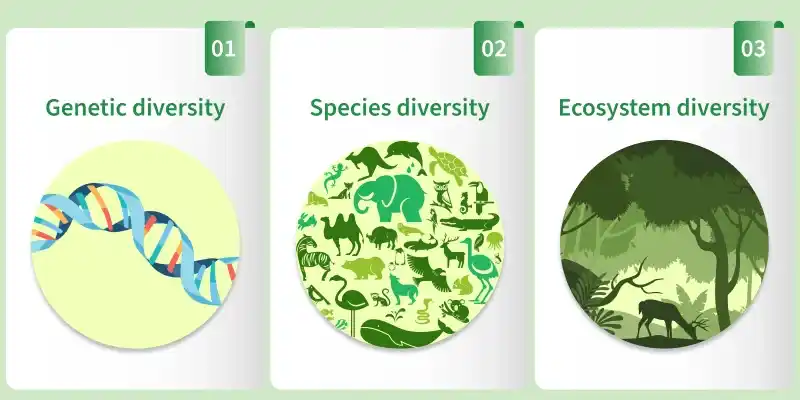
There are three types of Biodiversity given below:
- Genetic diversity refers to the variation of genes within a particular species. It is the diversity of genetic traits and characteristics that exists among individuals within a single population of a species.
- Species diversity refers to the variety and abundance of different species within a specific geographic region or ecosystem. It is a measure of the number of different species present and the relative proportions of each species.
- Ecosystem diversity refers to the variety of habitats, ecosystems, and ecological processes found within a particular geographic area. It encompasses a diversity of landscapes, such as forests, grasslands, wetlands, coral reefs, lakes, rivers, and deserts.
**Classification System
The grouping of life forms is finished by two systems. One is characterising them as plants and creatures, and the other one, which is a five-realm framework, is a more nitty-gritty and coordinated characterisation of living beings:
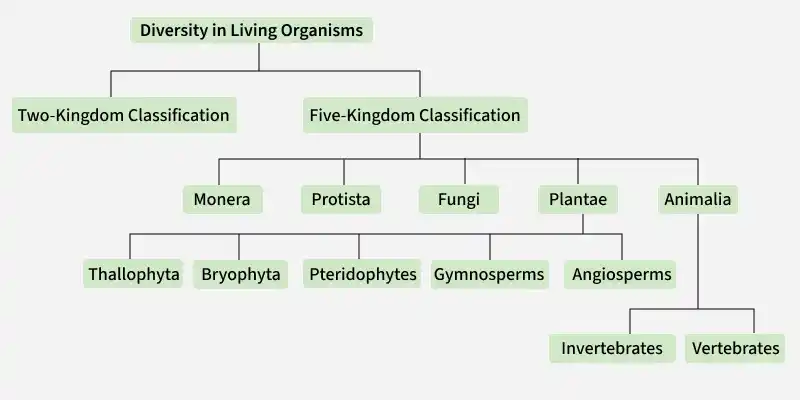
Two-Kingdom Classification
- Carolus Linnaeus proposed it.
- He ordered organic entities into two classifications: plants and organisms.
Five Kingdom Classification
- **It was proposed by R.H. Whittaker.
- He separated the life forms into five distinct classes.
Taxonomic Hierarchy of Classification
Carolus Linnaeus additionally organised the organic entities into various scientific classifications at various levels. Living things are classified taxonomically based on their evolutionary relationship, morphology, and genetic makeup.
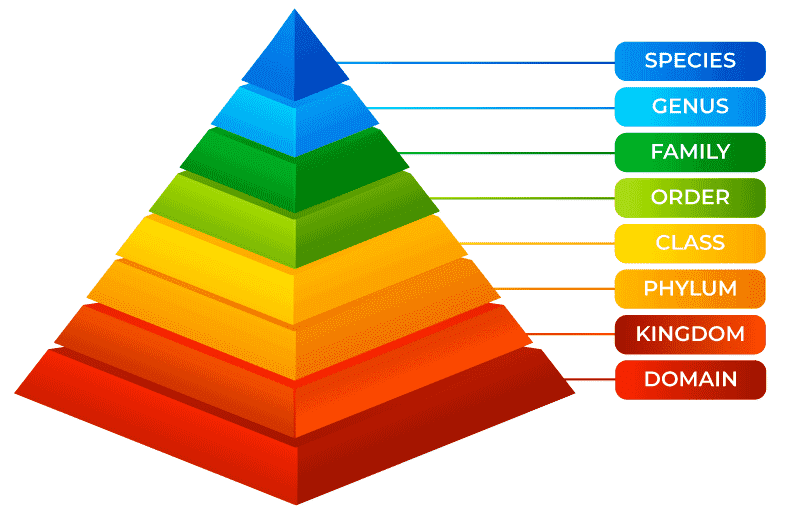
Taxonomic classification is as follows:
- **Domain: It is the highest taxonomic classification, and it includes bacteria, archaea, and eukaryotes.
- **Kingdom: Within the domain Eukarya, the primary kingdoms are Plantae, Fungi, Protista, and Animalia.
- **Phylum: Groups organisms based on major body plans or structural features.
- **Class: A subdivision of a phylum.
- **Order: It represents a group of connected families.
- **Family: It has to do with the assemblage of related genera.
- **Genus: It is made up of species that are either visually similar or closely related.
- **Species: Organisms that can interbreed and produce fertile offspring belong to the same species.
**Characteristics of Five Kingdoms
The vast diversity of living organisms on Earth makes classification essential for their systematic study. The five-kingdom classification provides a scientific framework to understand the characteristics and relationships of different groups of organisms.
.png)
**Kingdom Monera
- These are unicellular prokaryotes.
- The life forms come up short on the evident nucleus.
- Most have a cell wall (except mycoplasma)
- They might be heterotrophic or autotrophic in nature.
**For example: Bacteria, Cyanobacteria.
**Kingdom Protista
- Protista are unicellular and eukaryotic organic entities that go under this group.
- They display an autotrophic or heterotrophic method of nutrition.
- They show the presence of pseudopodia, cilia, or flagella for movement.
**For example: a paramecium.
**Kingdom Fungi
- These are multicellular (except yeast) and eukaryotic organisms.
- They have a saprophytic method of nourishment, which includes chemoheterotrophic extracellular processing.
- The cell wall in these organic entities is comprised of chitin.
- They live in symbiotic association with algae (lichens).
**For example: Yeast, Aspergillus
**Kingdom Plantae
- These are multicellular, eukaryotic organisms.
- Cell wall is made of cellulose.
- They are autotrophs and set up their own food through photosynthesis.
- Kingdom Plantae is partitioned into Thallophyta, Bryophyta, Pteridophyta, Gymnosperms, and Angiosperms.
**For example: Pine plants, palm trees, mango trees, and so on.
**Kingdom Animalia
- Kingdom Animalia are multicellular, eukaryotic living beings, yet they don't show the presence of cell walls.
- They are heterotrophs organisms that can't make their own food.
- Both straightforward and complex life forms are found in this gathering, and it's an extremely general gathering of organisms.
- The organic entities are hereditarily diverse.
- They display an organic-framework level of organisation.
- It is partitioned into various phyla, like Porifera, Coelenterata, Echinodermata, Chordata, Annelida, and so on.
**For example: Earthworms, Hydra, and so on.