Life Processes Class 10 Notes (original) (raw)
Last Updated : 23 Jul, 2025
**Life Processes Class 10 Notes helps students in preparing the chapter in a better way. Life processes are essential activities required for an organism's optimal well-being and proper functionality. An organism would not be able to exist without these vital life functions. The basic processes of life include organization, metabolism, response, motion, and reproduction.
**Life Processes Class 10 Notes NCERT describes in depth the various processes that both plants and animals go through. In this article, you will find the **notes on class 10 chapter on Life Processes.
Table of Content
- What are Life Processes?
- Types of Life Processes
- Nutrition
- Respiration
- Transportation
- Excretion
- Reproduction
- Digestion
**What are Life Processes?
The existence of life on Earth is primarily supported by several processes and functions. To preserve its health and the effective functioning of its organ systems, an organism must maintain some basic physiological processes. These life processes are needed for existence. The main processes performed by an organism are called life processes. There is a connection between these procedures.
These processes include activities like nutrition, respiration, circulation, excretion, and reproduction, which are necessary for the growth, development, and maintenance of the organism's body. No component of the body, from a single cell to an entire body system, functions independently. For the individual's health and to sustain life, all work in harmony with one another. A disturbance in the equilibrium of these processes is represented by illnesses like cancer and death.
**Types of Life Processes
Living things perform a few fundamental tasks that are vital to their survival. Some of the important life processes are discussed below:

**Nutrition
Nutrition is the process by which organisms obtain and utilize nutrients from their environment to support their growth, development, and energy needs. It involves the intake of food, digestion, absorption of nutrients, and the elimination of waste. All living things need energy and resources in some form.
Some living things use simple food substances like carbon dioxide and water that come from inorganic sources. There are two main types of nutrition: **autotrophic nutrition, where organisms produce their own food through photosynthesis or chemosynthesis, and **heterotrophic nutrition, where organisms obtain food from other sources. Now, let's see each in detail.
**Autotrophic Nutrition
Autotrophic nutrition is the method through which autotrophs absorb elements from the environment and transform them into stored forms of energy. Some plants use sunlight to produce food and are called '**photoautotrophs'. Whereas some bacteria utilises chemicals as their source of energy and are called '**chemoautotrophs'.
Photosynthesis
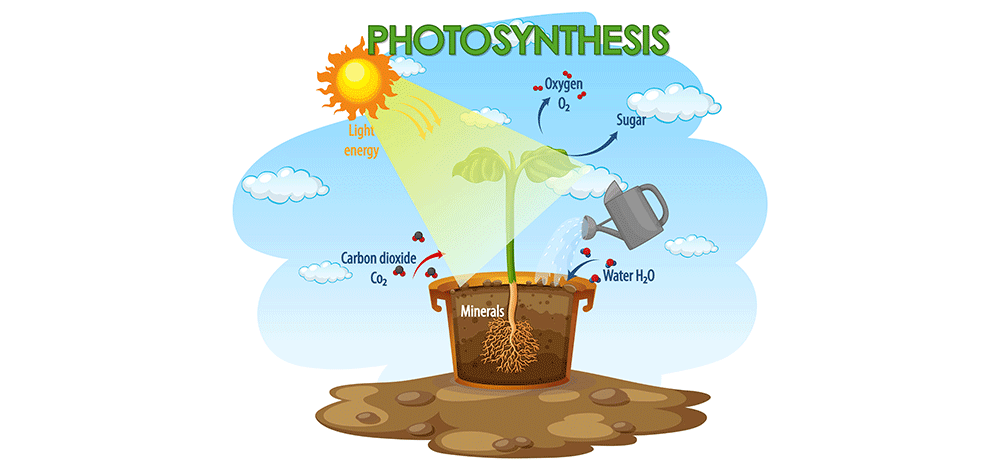
Photosynthesis is the process by which green plants, algae, and some bacteria convert light energy into chemical energy in the form of glucose.
- It occurs in chloroplasts, primarily in the leaves of plants, where chlorophyll absorbs sunlight.
- Carbon dioxide from the air and water from the soil are used to produce glucose, releasing oxygen as a byproduct.
- The equation for photosynthesis is: **6CO2 + 6H2O + light energy → C6H12O6 + 6O2.
- Photosynthesis provides oxygen for aerobic respiration and is the foundation of most ecosystems, providing energy for life on Earth.
**Heterotrophic Nutrition
Heterotrophic nutrition is a mode of nutrition where organisms depend on other organisms for their food supply. In this process, organisms cannot synthesize their own organic molecules and rely on consuming organic compounds produced by other living organisms. This type of nutrition includes various forms such as saprophytic, parasitic, and holozoic nutrition. Examples of organisms exhibiting heterotrophic nutrition include animals, fungi, and many bacteria.
Nutrition in Human Beings
Humans exhibit holozoic nutrition, where they ingest complex organic substances and break them down into simpler forms for absorption. The human digestive system consists of organs such as the mouth, esophagus, stomach, small intestine, large intestine, and associated glands like the liver and pancreas. Essential nutrients required by humans include carbohydrates, proteins, fats, vitamins, minerals, and water, obtained from various food sources.
The digestive process involves the following steps:
- **Ingestion: Intake of food through the mouth.
- **Digestion: Mechanical and chemical breakdown of food into simpler molecules.
- **Absorption: Passage of digested food molecules through the intestinal wall into the bloodstream.
- **Assimilation: Utilization of absorbed nutrients by cells for energy, growth, and repair.
- **Egestion: Elimination of undigested waste as feces.
**Respiration
When an organism uses food to produce energy, the process that takes place is known as **respiration. Organisms need a steady supply of oxygen to perform respiration, as well as a way to get rid of the carbon dioxide that is produced during the process. The methods used by diverse organisms to absorb oxygen and release carbon dioxide vary. Diffusion is a method used for this by unicellular and certain other prehistoric animals.
In **plants, diffusion is also utilized to exchange gases. In complex animals, the task of exchanging gases is done by the respiratory system. Gills are the fish's breathing apparatus. **Fish utilize their gills to inhale oxygen that is dissolved in the water. Aquatic species breathe more swiftly since there is less oxygen available there. **Insects use a system of spiracles and tracheae to take in oxygen. Terrestrial animals have lungs, which allow for gas exchange. **Humans breathe more slowly than fish because there is ample oxygen available on land.
**Also Read: Types and Phases of Respiration
Steps of Respiration
Carbohydrates are oxidized during respiration to provide energy. The mitochondria, where respiration takes place, are where energy is created and stored as ATP (adenosine triphosphate). ATP is stored in mitochondria and released as necessary.
- **Breaking down Glucose into Pyruvate: It occurs within the cytoplasm. The glucose molecule must be broken down in order to produce pyruvic acid. The glucose molecule includes six carbon atoms, whereas pyruvic acid only has three.
- **Fate of Pyruvic Acid: Depending on the type of respiration an organism utilizes, mitochondria further break down pyruvic acid, producing different compounds.
Types of Respiration
- **Aerobic Respiration: This type of respiration occurs when oxygen is present. Pyruvic acid is a source of carbon dioxide. Energy is released at the end of this process, and a water molecule is also produced.
- **Anaerobic Respiration: This type of respiration occurs without oxygen. Pyruvic acid is a compound that is converted into either lactic acid or ethanol. Typically, ethanol is produced when microorganisms like yeast or bacteria participate in anaerobic respiration. Lactic acid is produced by a few microbes as well as muscle cells.
**Also Read: Difference Between Aerobic and Anaerobic Respiration

**Transportation
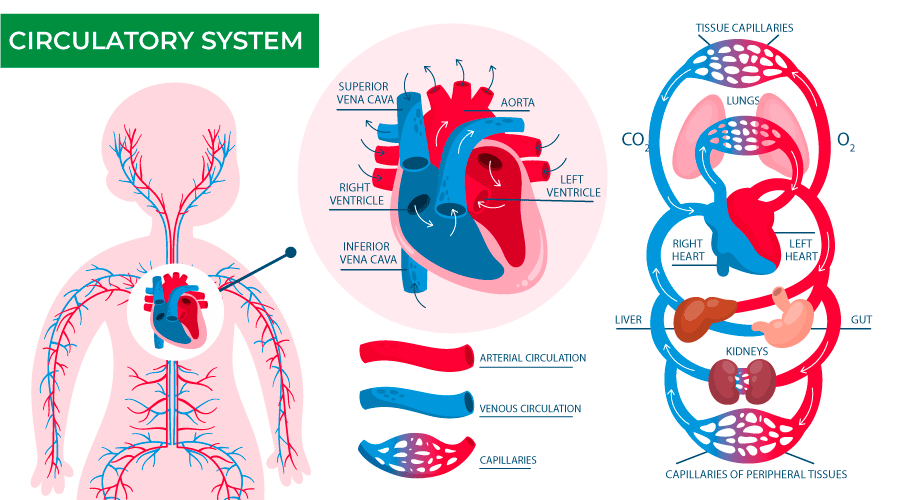
The body's organs, tissues, and cells that assist in moving nutrients, gases, hormones, and waste products throughout the body are together referred to as the transport system or circulatory system.
Transportation in Humans
These are the primary parts of this system:
**Circulatory Fluids
- **Blood: The fluid that travels through the **blood vessels is blood, which is movable, red, and watery. Hemoglobin is a pigment that gives it its crimson red color. Blood is made up of 45% blood cells (RBC, WBC, and platelets) and 55% plasma. An average person typically carries 5.5 liters of blood.
- **Lymph: Lymph is a colorless or pale yellow fluid that mimics blood but lacks platelets and red blood cells. Although the lymph's composition can vary, it typically consists of 94% water and 6% dissolved materials such as proteins, salts, and a significant amount of white blood cells
**Blood Vessels
All body components receive and deliver blood through hollow tubes known as blood arteries. The three primary types of blood vessels are as follows:
- **Arteries: The major function of arteries is to transport blood away from the heart. With the exception of the pulmonary artery, which carries deoxygenated blood, they typically transport oxygenated blood (blood with a greater oxygen saturation).
- **Veins: These blood channels transport blood to the heart and are a little thinner than arteries. Except for the pulmonary veins, which carry oxygenated blood from the lungs to the heart, they typically transmit deoxygenated blood (blood with low saturation oxygen).
**Also Read: Diagram of Blood Vessels
**Heart
The main function of the heart, a muscular organ in our body, is to pump blood through blood veins throughout the body. It is the main pumping organ. There are four chambers in the human heart. Blood is pumped into each of the two ventricles by two higher chambers known as the atria or auricles. Ventricles are the names of the two lowest chambers. Blood that has lost oxygen is pumped from the right ventricle into the pulmonary artery and then into the lungs.
The aorta receives oxygenated blood from the left ventricle and transports it throughout the body. A double membrane known as the pericardium covers the human heart. Three layers make up the heart wall: the epicardium, myocardium, and endocardium. Fine branching blood vessels called capillaries create a network of arteries and veins.
**Transportation in Plants
Transportation in plants refers to the movement of water, nutrients, and other substances throughout the plant. The various processes involved are:
- **Transpiration: Loss of water vapor from the aerial parts of the plant, primarily through small openings called stomata on leaves.
- **Absorption: Uptake of water and minerals from the soil by the roots, facilitated by root hairs and root systems.
- **Translocation: Movement of nutrients, hormones, and other substances through the plant's vascular system (xylem and phloem).
Structures involved in the process are:
- **Xylem: Conducts water and minerals from the roots to the rest of the plant.
- **Phloem: Transports sugars, amino acids, and other organic compounds produced in the leaves to other parts of the plant.
Mechanisms with helps in transportation are:
- **Root Pressure****:** Pressure exerted by roots helps push water upwards in the xylem.
- **Capillary Action: Water molecules move upwards in narrow tubes of the xylem due to cohesion and adhesion forces.
- **Transpirational Pull: Loss of water through transpiration creates tension, pulling water upward from the roots to replace it.

**Excretion
Excretion is the process of removing metabolic waste products from the body to maintain internal balance and prevent harmful buildup of toxins.
Excretion in Humans
The human body is a unique mechanism that can perform multiple life processes at the same time, including digestion, respiration, and blood circulation. As a result, our bodies produce numerous waste products in a variety of forms, including carbon dioxide, water, and nitrogenous wastes like urea.
The organs and mechanisms involved in excertion are:
- **Kidneys
- Perform vital filtration functions, removing waste products such as urea, excess salts, and water from the bloodstream.
- Produce urine, which is transported to the bladder for storage and eventual elimination from the body.
- **Skin
- Acts as a major excretory organ through sweat glands located throughout the body's surface.
- Sweat glands release sweat, containing water, salts, and urea, helping regulate body temperature and remove metabolic waste.
- **Lungs
- Expel carbon dioxide, a waste product of cellular respiration, during exhalation.
- Also release water vapor as a byproduct of respiration, contributing to the removal of excess water from the body.
- **Intestines
- Remove undigested food waste and other non-absorbable substances through bowel movements.
- Play a crucial role in eliminating waste material from the digestive system, ensuring efficient nutrient absorption and waste removal.

Excretion in Plants
Plants lack waste-removal organs of their own. There are many ways to remove plant excretory products from the plant body. Both respiration and photosynthesis produce waste products that are employed as starting materials in the other process. The stomata of leaves and the lenticels of stems are responsible for removing gaseous wastes, including oxygen, carbon dioxide, and water vapor. The leaves and bark of plants harbor some waste materials.
The wastes are eliminated by the bark and leaf shedding. The body of the plant stores some waste materials as solid objects after they have been rendered harmless. Tannins, rubber, resins, gum, and essential oils are a few examples of these wastes. The eucalyptus, jasmine, and orange tree oils, among other forms of accumulated waste products, as well as gums from acacia, rubber trees, and papaya trees. These chemicals are occasionally discharged into the soil.
Reproduction
Reproduction is the process by which organisms generate offspring, ensuring the continuation of their species.
Reproduction in Plants
There are two types of reproduction in plants:
- **Sexual Reproduction: Involves the fusion of male and female gametes to form a new individual. It requires the involvement of flowers, pollination, and fertilization.
- **Asexual Reproduction: Occurs without the fusion of gametes. Involves the production of new individuals from vegetative parts of the plant, such as roots, stems, or leaves.
Sexual Reproduction
The process of sexual reproduction involves:
Flower Formation
- Flowers are reproductive structures containing male and/or female reproductive organs.
- Sepals, petals, stamens (male), and pistils (female) are typical parts of a flower.
Pollination
- Transfer of pollen grains from the male reproductive organ (anther) to the female reproductive organ (stigma).
- Can occur through various agents like wind, insects, birds, or water.

sexual Reproduction in Plants via Pollination
Fertilization
- Fusion of a male gamete (sperm) with a female gamete (egg) to form a zygote.
- Zygote develops into a seed within the ovary of the flower.
Asexual Reproduction
The various methods of asexual reproduction are:
Vegetative Propagation
- Involves the production of new plants from vegetative parts of the parent plant, such as roots, stems, or leaves.
- Methods include cutting, layering, grafting, and budding.
Seed Dispersal
- Involves dispersal to seeds to far off places away from parent plant to increase their chances of survival by successful germination.
- Wind, water, animals, and self-propulsion are common methods of seed dispersal.
**Biological Reproduction in Humans
Human reproduction can only take place through sexual activity. In this procedure, two parents together create a new person. Gametes (sex cells) from both parents are fused to create offspring. As a result, the freshly developed person will be genetically and physically distinct from their parents. Sexual reproduction can be seen in human reproduction. Sexual dimorphism is the term used to describe the fact that in humans, males and females have different reproductive systems. While girls have two ovaries, males have testes, often known as testicles.
Fertilization is the term used to describe the fusing of sperm and egg (ovum) to create a zygote. A critical phase of human reproduction is fertilization. The zygote is the name for the fertilized egg. Beginning to split into numerous cells, the zygote transforms into an embryo. The embryo enters the uterus and attaches to its walls there. The embryo is inserted during this procedure, which is known as implantation, and eventually grows into a fetus.

**Digestion
One of the several biological processes that are present in almost all living things is digestion. In order for the body to easily absorb the simpler molecules, more complex molecules must first be broken down. For the purpose of digesting, there is a "tube" in higher creatures like humans. Once the food molecules have been reduced to simple molecules, the blood plasma is where the simple molecules are then absorbed.
Another type of digesting, known as phagocytosis, is displayed by numerous organisms, including amoeba. Here, the organism, which is typically a single cell, uses its plasma membrane to absorb food particles, causing an internal component to develop as an outcome. The food fragments are digested and absorbed once within.
Animals with single openings in their digestive canals include hydras. As a result, food is consumed, broken down, and then reabsorbed through the same aperture. The digestive canals of higher animals contain two openings, allowing for continuous feeding.
